
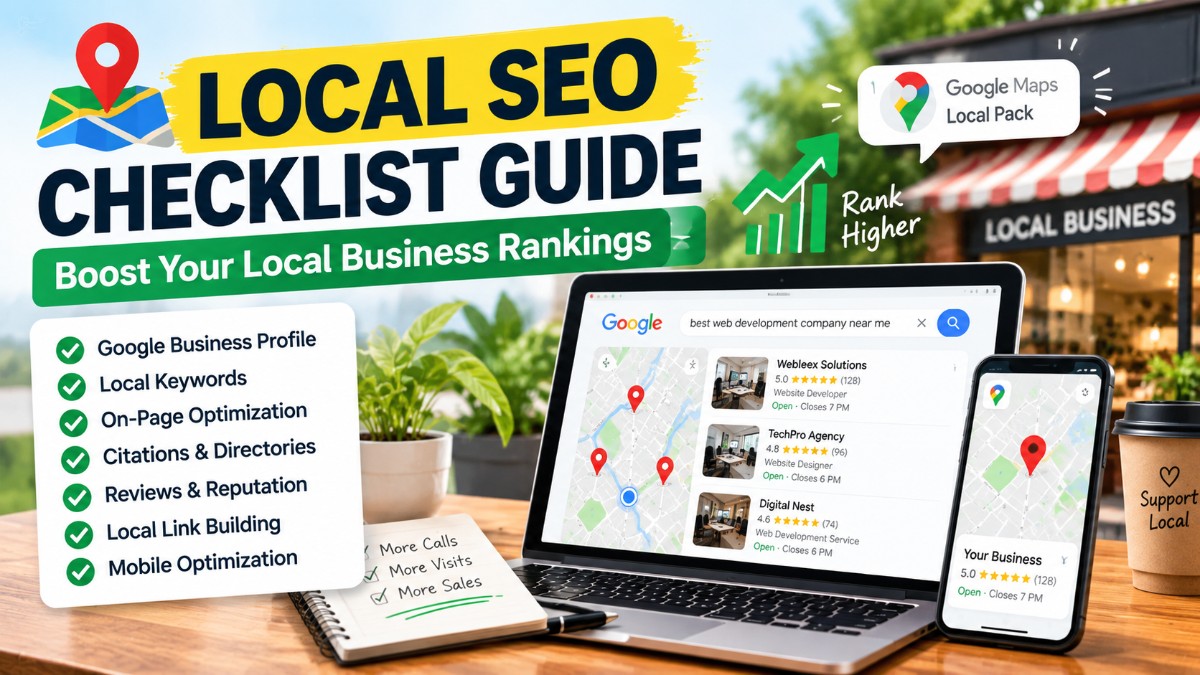
Local SEO Checklist Guide: Step-by-Step Optimization for Your Business
If you want to attract more customers from your local area, following a detailed local SEO checklist guide is essential. Local SEO helps your business show up in search results when people nearby look for your products or services. This guide breaks down every crucial step you need to take, with clear explanations and practical tips to ensure your business stands out in local search. Whether you’re a small shop, a service provider, or a multi-location business, mastering local SEO can significantly increase your visibility and revenue.
local SEO checklist guide: Understanding Local SEO and Its Importance
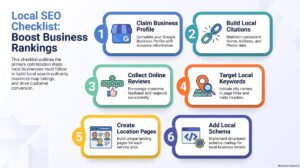
Local SEO focuses on optimizing your online presence to appear in searches with local intent, such as “coffee shop near me” or “plumber in [city].” Unlike general SEO, local SEO targets customers in your vicinity, driving foot traffic, calls, and online orders. Key elements include Google My Business, local citations, on-page signals, and reviews.
Before diving into the checklist, it’s important to know that local SEO demands consistent and accurate business information across the web, high-quality local backlinks, and a strong reputation. Search engines like Google use a combination of these signals to determine which businesses to display for local queries. For example, if you run a bakery in Chicago, Google will prioritize listings that clearly show you are located in Chicago, have positive reviews, and are linked from other reputable local sources.
Local SEO is particularly crucial because mobile and voice searches increasingly include location-based queries. According to studies, nearly half of all Google searches have local intent. This means optimizing for local SEO is not optional if you want to capture this valuable traffic.
1. Claim and Optimize Your Google My Business (GMB) Listing
Claim Your Listing
Start by locating your business on Google My Business. If it exists, claim it; if not, create a new listing. This is the foundation of local SEO. Ensure you use the exact business name, address, and phone number (NAP) that you use offline. For example, if your business is “John’s Plumbing Services,” do not list it as “John Plumbing” or “John’s Plumbing.” Consistency here is key.
To claim your listing, sign in to Google My Business, search for your business, and follow the prompts to verify ownership. If you create a new listing, fill out all required fields carefully.
Optimize Your Profile
- Business Name: Use your real business name without keyword stuffing. Avoid adding city names or keywords unless they are part of your official business name.
- Address & Phone: Make sure they are accurate and match your website and other listings exactly. Use a local phone number rather than a toll-free number for better local relevance.
- Business Categories: Select primary and secondary categories that accurately describe your business. For example, a bakery might choose “Bakery” as the primary category and “Coffee Shop” as a secondary category if applicable.
- Hours of Operation: Keep these updated, especially during holidays or special events. Incorrect hours can frustrate customers and negatively impact your ranking.
- Photos: Add high-quality images of your storefront, products, and team to build trust. Businesses with photos receive 42% more requests for directions and 35% more clicks through to their websites.
- Business Description: Write a clear, engaging description incorporating local keywords naturally. Avoid keyword stuffing; instead, focus on what makes your business unique in your community.
Verify Your Listing
Google requires verification, usually via postcard, phone, or email. Complete this step promptly to enable full GMB features. The postcard method is most common and involves Google sending a postcard with a verification code to your business address. Once received, enter the code in your GMB dashboard. Verification confirms your legitimacy and allows you to respond to reviews, add posts, and access insights.
Tip: If you have multiple locations, claim and verify each one separately to maximize local SEO benefits.
2. Ensure NAP Consistency Across All Platforms
NAP consistency means your business name, address, and phone number must be identical everywhere your business is listed online. This includes your website, social media profiles, directories, and citation sites.
Why Consistency Matters
Inconsistent NAP information confuses search engines and users, harming your local rankings. For example, if your website lists your address as “123 Main St.” but a directory shows “123 Main Street,” this discrepancy can lower your local search trustworthiness. Search engines rely on matching data points to confirm your business’s legitimacy and location.
Moreover, inconsistent information can frustrate potential customers who may call the wrong number or visit the wrong location.
How to Check and Fix NAP
- Make a list of all places your business is listed, including social media, directories, and review sites.
- Check each for discrepancies in your NAP. Pay attention to abbreviations, punctuation, and phone number formats.
- Update incorrect listings or request removal of duplicates. Some directories allow you to claim and edit listings; for others, you may need to contact support.
- Use tools like Moz Local or BrightLocal for bulk citation management. These tools scan the web for your listings, highlight inconsistencies, and offer options to update or suppress duplicates.
Example: If your phone number is (555) 123-4567 on your website, ensure it’s exactly the same on Yelp, Facebook, and all other platforms.
3. Build and Manage Local Citations
Local citations are mentions of your business on local directories, review sites, and social platforms. They help establish your business’s legitimacy and location relevance. Citations can be structured (with NAP details) or unstructured (mentions without full details).
Top Citation Sources
- Google My Business
- Yelp
- Facebook Business
- Local Chamber of Commerce directories
- Industry-specific directories (e.g., Houzz for home services, TripAdvisor for hospitality)
Best Practices for Citations
- Ensure NAP consistency as discussed earlier.
- Complete all available fields including business description, photos, and categories to maximize the value of each citation.
- Regularly update citations when your business information changes, such as moving locations or changing phone numbers.
- Prioritize high-authority and relevant local directories over low-quality or spammy sites, which can harm your SEO.
- Monitor your citations periodically to ensure they remain accurate and active.
Example: Register your business on your city’s official business directory or local news websites that offer business listings. These citations carry more weight than generic national directories.
4. Optimize Your Website for Local SEO
On-Page Local SEO Elements
- Title Tags & Meta Descriptions: Include your city or region naturally. For example, “Best Coffee Shop in Austin, TX | Brewed Awakenings.” Avoid keyword stuffing; focus on readability and relevance.
- Header Tags: Use location keywords in H1 and H2 headings. For instance, your homepage H1 could be “Your Neighborhood Bakery in Brooklyn.” This helps search engines understand your geographic focus.
- NAP on Website: Display your business name, address, and phone number prominently, ideally in the footer and contact page. Use consistent formatting and consider embedding a Google Map for user convenience.
- Local Content: Create blog posts or pages about local events, news, or activities related to your business. For example, a landscaping company might write about “Top Spring Gardening Tips for Seattle Residents.” This not only attracts local visitors but also signals relevance to search engines.
- Schema Markup: Implement LocalBusiness schema to help search engines understand your location and services. Schema markup adds structured data to your HTML, enabling rich snippets in search results. Use tools like Google’s Structured Data Markup Helper or plugins if you use CMS platforms like WordPress.
Technical SEO Checks for Local Sites
- Ensure your site loads quickly (aim for LCP ≤ 2.5s, INP ≤ 200ms, CLS ≤ 0.1). Use tools like Google PageSpeed Insights to identify bottlenecks and optimize images, scripts, and server response times.
- Make sure your site uses HTTPS for security. Google favors secure sites, and users trust them more.
- Confirm mobile-friendly design as many local searches happen on mobile. Use Google’s Mobile-Friendly Test to verify usability.
- Check for crawl errors, broken links, and proper 200 status responses using Google Search Console. Fix issues promptly to ensure search engines can index your site effectively.
- Maintain a clean XML sitemap and submit it to Google Search Console. This helps search engines discover your pages faster.
Safe Implementation Tip: Before making major technical changes, backup your website and test updates in a staging environment to avoid downtime or errors.
5. Generate and Manage Customer Reviews
Reviews heavily influence local search rankings and customer trust. Encourage satisfied customers to leave reviews on Google, Yelp, and other relevant platforms. Positive reviews improve your business’s visibility and credibility.
How to Collect Reviews
- Ask customers in person or via email after a purchase or service. Timing is important; request reviews soon after a positive experience.
- Provide clear instructions and direct links to your review profiles to make the process easy. For example, include a link to your Google My Business review page in your email signature or follow-up messages.
- Consider using automated tools to request reviews politely, such as email marketing platforms or CRM systems with review request features.
- Incentivizing reviews is generally discouraged by platforms like Google, so avoid offering rewards in exchange for reviews to stay compliant.
Responding to Reviews
Respond promptly and professionally to all reviews, positive or negative. Thank customers for positive feedback and address any concerns in negative reviews constructively. For example, if a customer complains about a delayed service, apologize sincerely, explain any corrective actions, and invite them to contact you directly to resolve the issue.
Active review management signals to search engines that you engage with customers, which can improve your rankings. It also builds trust with potential customers reading your reviews.
6. Build Local Backlinks and Engage with the Community
Local backlinks from reputable sites can boost your domain authority and local relevance. Consider partnerships with local organizations, sponsorships, or guest posts on local blogs. These backlinks help search engines associate your business with your community.
Effective Local Link Building Strategies
- Get listed on local business associations and chamber of commerce websites. These often have high domain authority and are trusted sources.
- Collaborate with local events or charities and request backlinks. For example, sponsor a community festival and ask to be featured on their website.
- Write guest articles for local news sites or blogs. Share your expertise on topics relevant to your industry and community.
- Engage on local forums or social media groups to increase visibility and build relationships. While these may not always provide direct backlinks, they can drive referral traffic and brand awareness.
Note: Avoid buying links or participating in link schemes, as these violate Google’s guidelines and can lead to penalties.
7. Perform Regular Local SEO Audits
Regular audits help you identify and fix issues that could harm your local SEO performance. A thorough audit ensures your efforts remain effective and adapt to changes in search engine algorithms or your business.
What to Check During an Audit
- Verify NAP consistency across all listings to avoid conflicting information.
- Check Google My Business insights and update where necessary. Analyze search queries, customer actions, and photo views to understand performance.
- Analyze website performance metrics like loading speed and mobile usability. Address any technical issues found.
- Review backlinks and remove spammy or broken links using tools like Google Search Console or Ahrefs.
- Monitor reviews and reputation online, responding to new feedback and identifying trends.
For a comprehensive approach, consider using tools recommended in our SEO Audit Checklist Guide: Complete Website Optimization Steps. These tools can automate parts of the audit and provide actionable insights.
Audit Frequency: Conduct audits at least twice a year, or more frequently if your business undergoes significant changes.
Local SEO Checklist Summary Table
| Task | Details | Frequency | Tools/Notes |
|---|---|---|---|
| Google My Business Setup | Claim, verify, and optimize your profile | Once; update as needed | Google My Business Dashboard |
| NAP Consistency Check | Ensure uniform business info everywhere | Quarterly | Moz Local, BrightLocal |
| Local Citations | Submit to relevant directories | Once; update if info changes | Local directories, chamber sites |
| On-Page SEO | Optimize titles, headers, schema, content | Ongoing | Yoast SEO, Schema plugins |
| Review Management | Collect and respond to reviews | Monthly | Google, Yelp, Review management tools |
| Local Link Building | Gain backlinks from local sources | Ongoing | Outreach, local partnerships |
| Local SEO Audit | Check all local SEO factors | Biannually | SEO audit tools, manual checks |
Frequently Asked Questions About Local SEO
What is the most important factor in local SEO?
Google My Business optimization is often considered the most critical factor, as it directly influences your appearance in local search results and Google Maps. A well-optimized GMB listing with accurate information, photos, and reviews can significantly improve your visibility.
How often should I update my local business listings?
Update your listings immediately when your business information changes. Regular quarterly reviews help maintain consistency and accuracy. This proactive approach prevents outdated information from harming your rankings or confusing customers.
Can I do local SEO on my own?
Yes, many local SEO tasks can be done independently with the right knowledge and tools. This guide provides a thorough roadmap to get started effectively. However, for complex technical SEO or large multi-location businesses, consulting with a local SEO specialist may be beneficial.
How do reviews impact local SEO?
Reviews influence both rankings and customer trust. Positive reviews improve your local search visibility and encourage more customers to choose your business. Additionally, responding to reviews shows engagement and professionalism, which can further enhance your reputation.
Conclusion and Next Steps
Implementing this local SEO checklist guide will help you systematically improve your local search presence and attract more local customers. Start by claiming and optimizing your Google My Business listing, then ensure your NAP consistency, build citations, and optimize your website’s local SEO elements.
Regularly monitor reviews and backlinks, and perform local SEO audits to stay ahead of competition. For deeper keyword research tailored to your local market, explore our SEO Keyword Research for Beginners Guide.
Remember to backup your website before making major changes, especially technical SEO updates, and consider using a staging environment to test optimizations safely. This approach minimizes risks and ensures your site remains live and functional during improvements.
Local SEO is an ongoing process that requires attention and adaptation. By following this checklist and staying informed about best practices, your business can achieve sustained growth in your local market.
Official Resources and Further Reading
These official resources are useful for checking the documentation and maintaining your setup as tools change.