

AI Content Policy Guide for 2026: Governance, Review, and Safety
Introduction
As AI-generated content becomes more common, a documented AI content policy helps businesses, marketers, and website owners manage accuracy, copyright, privacy, disclosure, and reputational risk. AI can assist with articles, social posts, images, and research, but every public output still needs accountable human review.
This guide explains how to create an AI content policy, establish review and approval steps, and document practical safety rules. For a clear foundation on where AI differs from rule-based systems, read our AI and automation beginner guide.
What Are AI Content Policies?
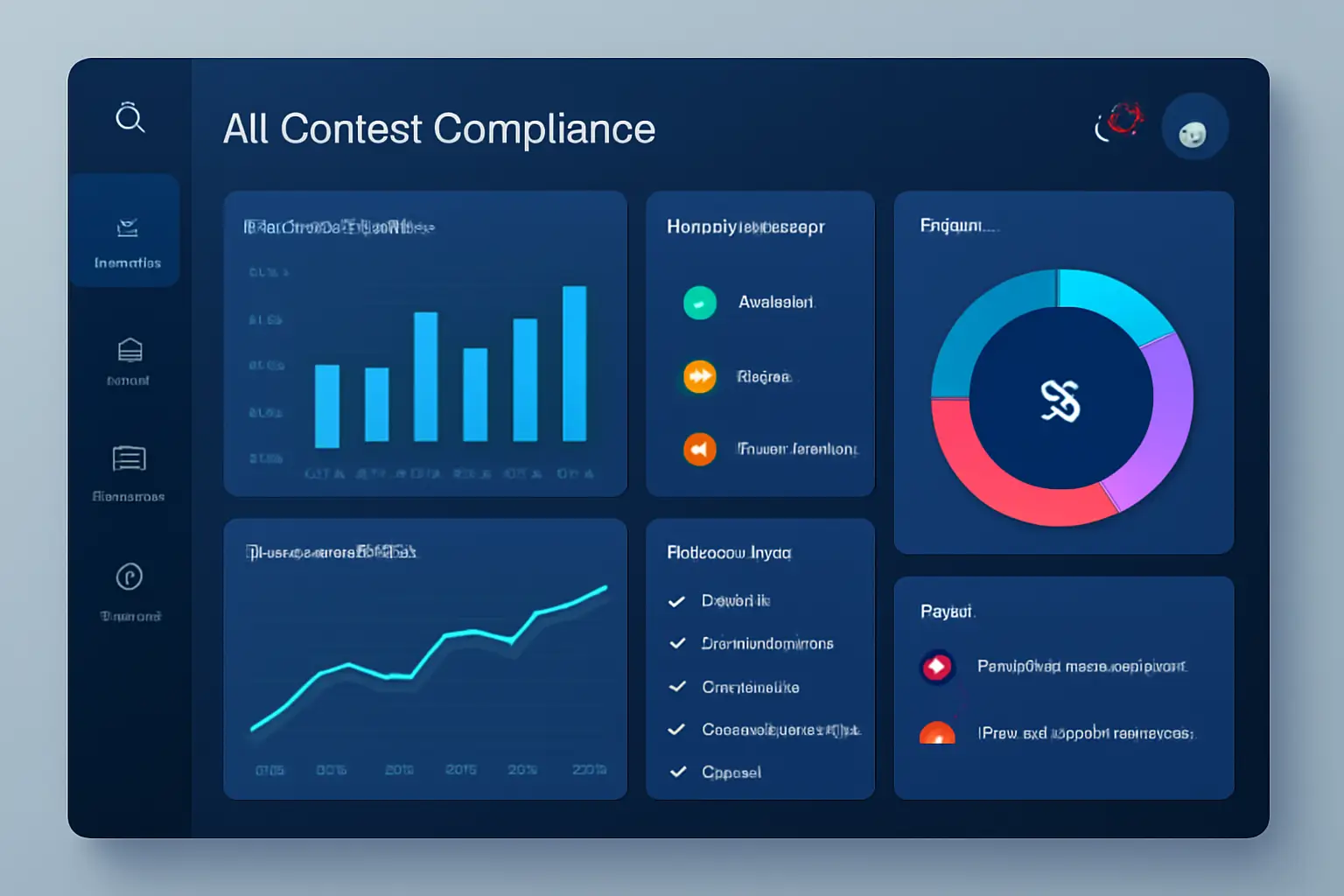
AI content policies are a set of rules and guidelines that govern the creation, review, moderation, and distribution of AI-generated content. They ensure that AI tools are used ethically, legally, and in ways that protect brand integrity.
Key Elements Include:
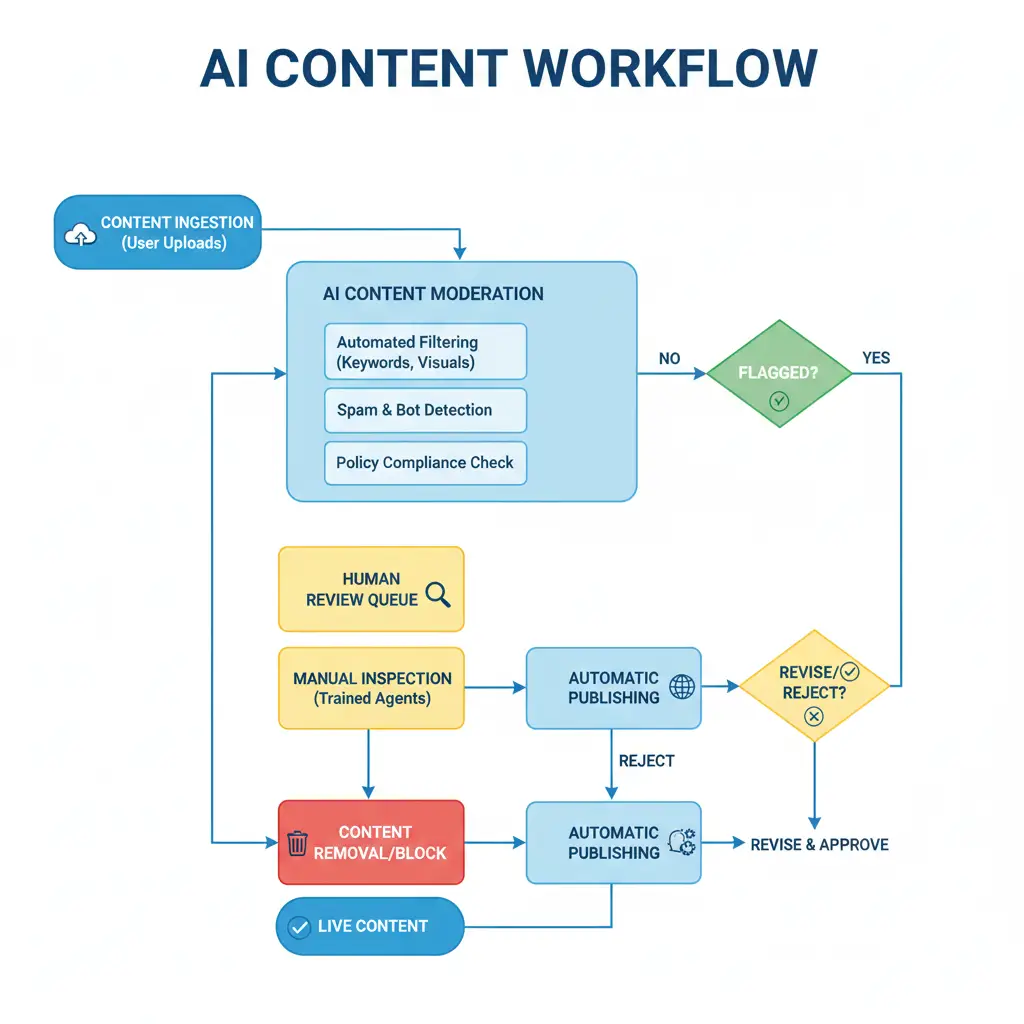
- AI content moderation rules – Guidelines to review content for compliance, safety, and quality.
- AI content transparency requirements – Ensuring users know when content is AI-generated.
- AI content and copyright policy – Protecting intellectual property while using AI tools.
Why AI Content Policies Matter in 2026
With AI tools used across writing, design, support, and marketing, businesses need clear ownership and review rules. Requirements differ by country, industry, platform, and use case, so legal questions should be reviewed by a qualified professional. A practical policy can help teams:
- Avoid copyright infringement
- Maintain ethical content usage
- Ensure trust and safety for users
- Improve SEO and content quality standards

How to Create an AI Content Policy
Step-by-Step Process:
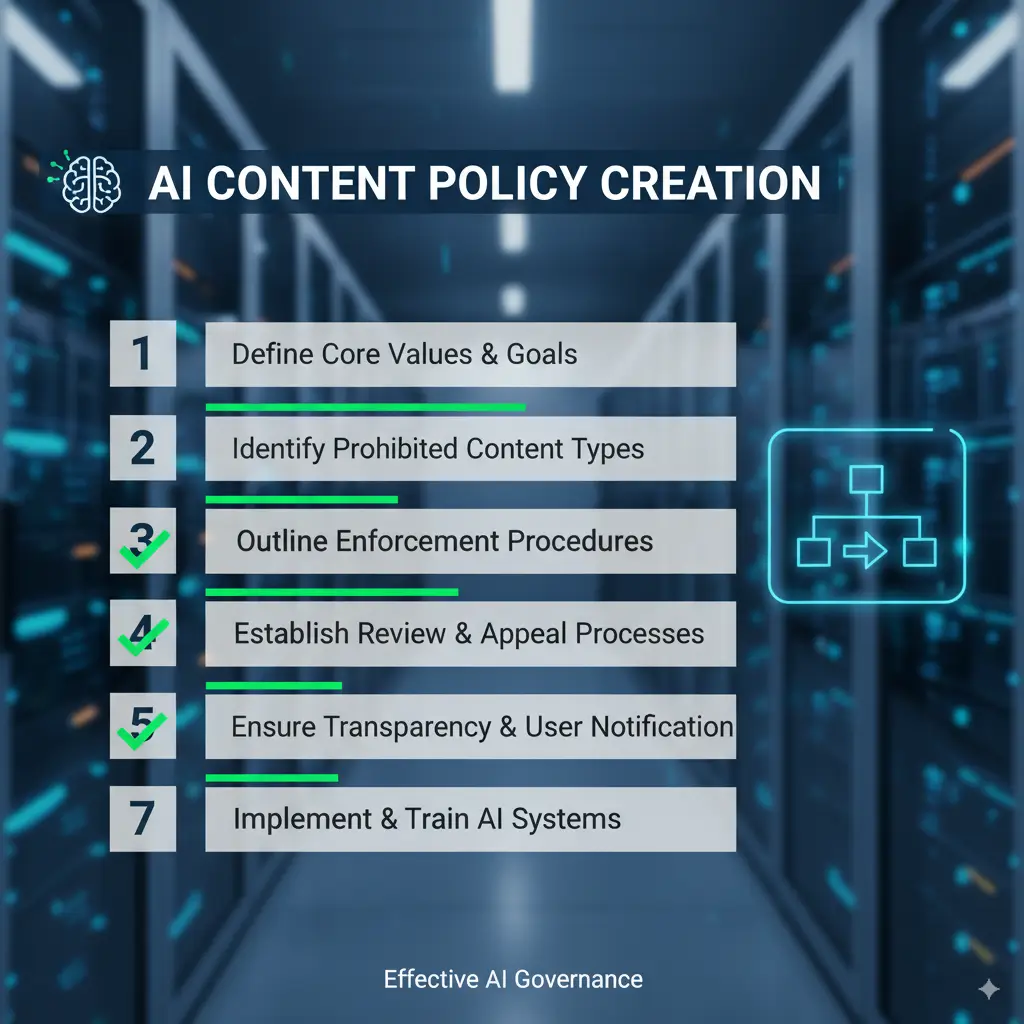
- Define Scope – Decide what AI-generated content will be used for: blogs, social media, marketing campaigns.
- Set Guidelines – Include AI content moderation rules, ethical AI content usage policy, and AI content filtering standards.
- Review Process – Establish an AI content review and approval process to check for accuracy, legality, and brand alignment.
- Compliance & Legal Considerations – Address legal regulations on AI content, copyright, and disclosure requirements.
- Documentation & Transparency – Ensure AI content transparency requirements are clear for internal teams and audiences.
Best AI Content Guidelines for Websites
Following these best AI content guidelines for websites ensures compliance, trust, and SEO benefits:
- Use AI to assist, not fully replace human writers
- Clearly disclose AI-generated content
- Monitor for plagiarism and copyright issues
- Maintain high AI content quality standards
- Ensure accessibility and readability

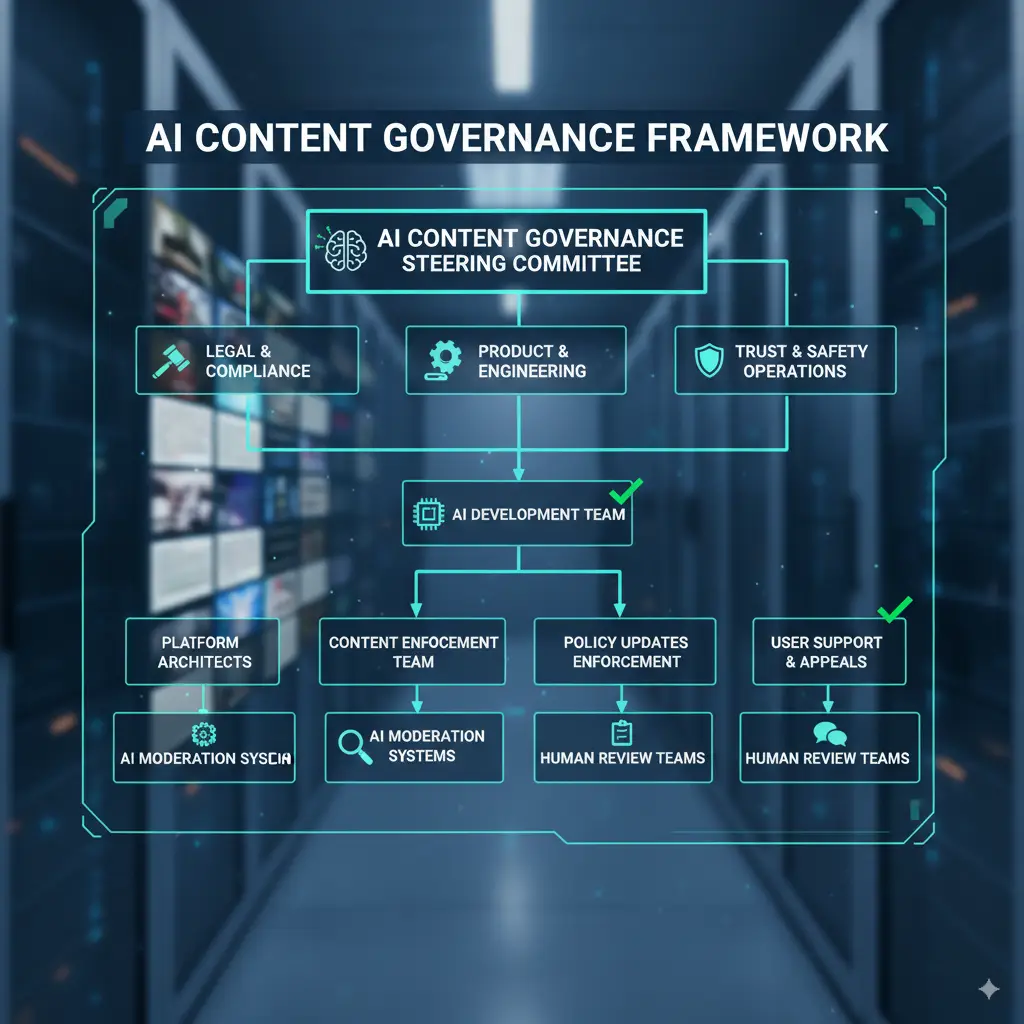
AI Content Governance Framework
A strong AI content governance framework includes:
- Roles and Responsibilities – Who approves AI-generated content?
- Monitoring and Reporting – Track compliance with policies.
- Transparency and Audit Trails – Document AI usage decisions.
- Risk Assessment – Identify potential ethical or legal risks.
AI Content Policy for Social Media
AI-generated content on social media requires additional safeguards:
- AI content policy for social media should include moderation rules, brand voice alignment, and audience safety.
- Implement AI content filtering standards to prevent offensive or misleading content.
- Use scheduled audits and analytics to ensure ongoing compliance.
AI Content Policy Challenges and Solutions
Common challenges:
- Difficulty maintaining AI content quality standards
- Legal uncertainties around AI content and copyright policy
- Over-reliance on AI tools leading to misinformation
Solutions:
- Create a review and approval process before publishing AI content
- Train teams on ethical AI content usage policies
- Implement continuous monitoring using AI moderation tools
AI Content Trust and Safety Policies
Trust and safety are central to AI content policy. Key points include:
- Avoid spreading misinformation or harmful content
- Maintain user privacy and data protection
- Regularly update AI content moderation rules
AI Content Policy Examples
- Corporate Blog: Clearly mark AI-generated posts and set editorial review standards
- E-commerce Websites: Ensure AI product descriptions comply with copyright rules
- Social Media Pages: Use moderation frameworks to filter offensive AI-generated comments
Conclusion
In 2026, an effective AI content policy should define approved uses, prohibited uses, accountable reviewers, evidence checks, disclosure rules, privacy safeguards, and an escalation process. Review the policy regularly as tools, platform requirements, and applicable laws change.
FAQs
1. What are the best AI content guidelines for websites?
Use AI ethically, disclose AI-generated content, monitor for copyright issues, and maintain content quality standards.
2. How do I create an AI content policy?
Define scope, set guidelines, establish a review process, ensure legal compliance, and document transparency.
3. What are AI content moderation rules?
Rules for reviewing, filtering, and approving AI-generated content to maintain ethics, legality, and quality.
4. How does AI impact content policy compliance?
AI introduces copyright, ethical, and transparency challenges that require structured governance and review processes.
5. Can an AI content policy support SEO quality?
It can support accuracy, originality, editorial review, accessibility, and useful content. It does not guarantee rankings; search performance should be measured in Search Console.