
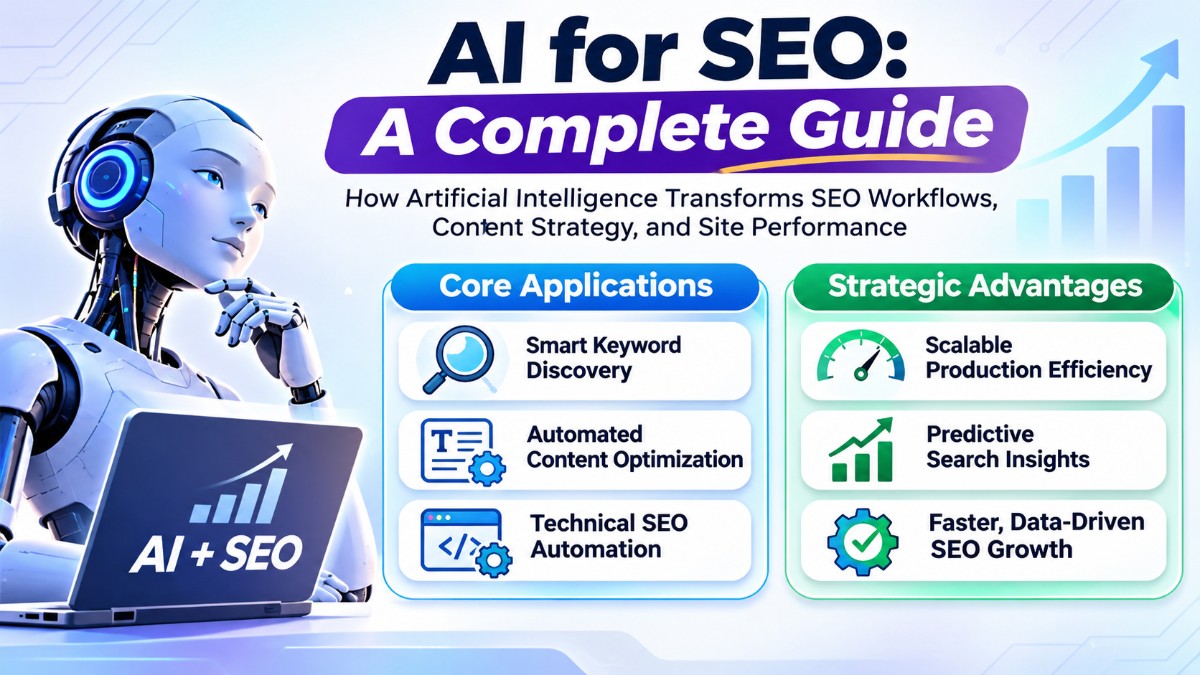
AI for SEO: A Complete Guide
In today’s competitive digital landscape, leveraging AI for SEO is no longer optional but essential. If you’re looking to enhance your website’s search engine rankings and streamline your SEO efforts, understanding how artificial intelligence can assist is crucial. This guide explores how AI integrates with SEO, offering practical insights and strategies to help you boost organic traffic efficiently and effectively. We will delve into concrete examples, safe implementation practices, common pitfalls, and verification methods to ensure your AI-powered SEO initiatives deliver real value.
What Is AI for SEO?
AI for SEO refers to the use of artificial intelligence technologies—such as machine learning, natural language processing (NLP), and advanced data analytics—to automate, enhance, and optimize various SEO tasks. These technologies allow marketers and SEO professionals to process large datasets, identify patterns, and generate actionable insights that would be impractical or impossible to achieve manually.
For example, machine learning algorithms can analyze historical search data to predict keyword trends, while NLP models can understand the context and intent behind search queries, enabling more relevant content creation and optimization. By integrating AI into your SEO strategy, you can reduce human error, increase efficiency, and focus your efforts on high-impact activities.
AI for SEO spans a wide range of applications, including keyword research, content creation and optimization, technical audits, and performance forecasting—all designed to improve your website’s visibility and user engagement.
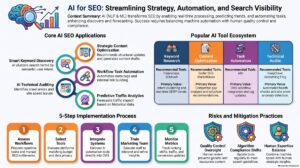
Key Applications of AI in SEO
1. AI-Powered Keyword Research
Traditional keyword research involves manually analyzing search volumes, competition levels, and trends, which can be time-consuming and limited in scope. AI-powered tools, however, can process massive amounts of search data in real-time, uncovering high-potential keywords, long-tail phrases, and emerging topics that might otherwise go unnoticed.
For instance, AI can cluster related keywords based on semantic similarity and user intent, helping you target groups of keywords that align with your content strategy. This approach improves your chances of ranking for multiple related queries rather than focusing narrowly on single keywords.
Example: Using an AI tool, you might discover that “eco-friendly running shoes” is gaining traction alongside “sustainable athletic footwear,” allowing you to optimize content for both terms simultaneously. This strategic targeting can capture a broader audience with relevant search intent.
2. Content Optimization and Creation
AI assists in optimizing existing content by analyzing factors such as readability, keyword density, semantic relevance, and user engagement metrics. Advanced AI models can generate content drafts, suggest topic ideas, and even recommend structural improvements to enhance SEO performance.
However, while AI can produce initial drafts or outlines, it is critical to review and refine this content to ensure originality, brand voice consistency, and factual accuracy. Overreliance on AI-generated content without human oversight can lead to generic or low-quality pages that may harm your SEO.
Safe Implementation Tip: Use AI-generated content as a starting point or inspiration, then have experienced writers edit and enrich it with unique insights and up-to-date information.
3. SEO Automation
Many SEO tasks are repetitive and time-consuming, such as generating meta tags, suggesting internal links, or monitoring keyword rankings. AI-powered automation tools can handle these tasks efficiently, freeing your team to focus on strategy and creative work.
For example, automating WordPress SEO workflows with tools like n8n can streamline processes such as updating meta descriptions or scheduling content audits. Automation reduces manual errors and ensures consistent application of SEO best practices across your site.
4. Technical SEO Audits
Technical SEO is critical for ensuring search engines can crawl and index your site effectively. AI-driven audit tools scan your website to detect issues like crawl errors, broken links, duplicate content, slow page speeds, and mobile usability problems.
These tools prioritize fixes based on their potential impact on search rankings, helping you allocate resources wisely. For example, DeepCrawl and Screaming Frog use AI to identify patterns and anomalies that might not be obvious through manual checks.
Verification: After implementing fixes, it’s important to re-run audits and monitor Google Search Console for any lingering issues or new errors.
5. Predictive Analytics and Ranking Forecasts
Machine learning models can analyze historical data to forecast how changes in your SEO strategy—such as targeting new keywords or improving site speed—might affect your rankings and traffic. This predictive capability enables proactive decision-making rather than reactive adjustments.
Example: Before launching a new content campaign, AI analytics might predict a 15% increase in organic traffic based on similar past initiatives, helping justify the investment.
However, predictions are probabilistic and should be combined with ongoing monitoring and testing to validate assumptions.
Popular AI SEO Tools and Platforms
- Keyword Research: Tools like Clearscope and SEMrush integrate AI to suggest keywords and content topics based on search intent and competitive analysis. These platforms offer features such as keyword difficulty scores, SERP analysis, and trend tracking.
- Content Optimization: Platforms such as Surfer SEO and MarketMuse analyze content quality and relevance by comparing your pages against top-ranking competitors, suggesting improvements in keyword usage, structure, and semantic coverage.
- Automation: Workflow automation tools like n8n help integrate AI-powered SEO tasks into your content management system, enabling automatic updates and alerts.
- Technical SEO: AI-powered audit tools like DeepCrawl and Screaming Frog offer comprehensive site health checks, including crawlability, indexability, and performance metrics.
Choosing the right combination depends on your specific needs, budget, and technical expertise. For example, small businesses may prioritize ease of use and cost-effectiveness, while enterprise-level sites might require more customizable and scalable solutions.
How to Implement AI for SEO: Step-by-Step
- Assess Your Current SEO Process: Begin by mapping out your existing SEO workflows and identifying repetitive tasks, bottlenecks, or areas prone to errors that AI could improve. For example, if keyword research takes significant time, AI tools can accelerate this phase.
- Select Suitable AI Tools: Research AI SEO tools that align with your goals. Consider factors like ease of integration, data privacy policies, pricing, and support. Trial versions can help evaluate their effectiveness before committing.
- Integrate AI with Existing Workflows: Use automation platforms or plugins to connect AI tools with your CMS, analytics systems, or project management software. For instance, integrating n8n with WordPress can automate meta tag updates based on AI recommendations.
- Train Your Team: Educate your SEO and content teams on how to interpret AI insights and use tools effectively. Emphasize that AI is an aid, not a replacement for human judgment. Training reduces misuse and maximizes ROI.
- Monitor and Adjust: Continuously track performance metrics such as rankings, organic traffic, bounce rates, and conversion rates. Use A/B testing to evaluate AI-driven changes and refine your approach based on data.
For a comprehensive understanding of optimizing your website’s crawl management, consider reading the WordPress Robots Txt Optimization Guide. Proper crawl control complements AI-driven SEO by ensuring search engines index your site efficiently.
Common Challenges and Limitations of AI in SEO
- Quality Control: AI-generated content may lack nuance, creativity, or context-specific understanding, requiring human editing to avoid bland or inaccurate pages. Blindly publishing AI content can lead to penalties or poor user engagement.
- Algorithm Changes: Search engines frequently update their algorithms, sometimes rendering AI tool recommendations outdated. Regularly updating your tools and strategies is essential.
- Data Privacy: Using AI tools often involves processing user data. Ensure compliance with regulations like GDPR or CCPA by understanding data handling policies of AI providers and implementing safeguards.
- Overdependence: Relying solely on AI can overlook creative, strategic, and brand-specific SEO elements that require human insight. AI should augment—not replace—expertise.
- Technical Complexity: Some AI tools require technical skills for integration and customization, which can be a barrier for smaller teams without dedicated developers.
Balancing AI assistance with expert oversight ensures the best outcomes. Establish clear workflows where AI outputs are reviewed and contextualized by SEO professionals.
Best Practices for Using AI in SEO
- Combine AI Insights with Human Expertise: Use AI to augment your SEO team’s skills, not replace them. Human judgment is critical for interpreting AI outputs and making strategic decisions.
- Focus on User Experience: Ensure AI-driven optimizations enhance readability, engagement, and accessibility. Search engines increasingly prioritize user-centric metrics.
- Stay Updated: Keep abreast of AI advancements and search engine guidelines, such as those from Google Search Central documentation. This helps you adapt quickly to changes.
- Test and Measure: Regularly analyze the impact of AI-driven changes on rankings, traffic, and conversions. Use tools like Google Analytics and Search Console for monitoring.
- Maintain Ethical Standards: Avoid black-hat SEO tactics or manipulative AI content generation that could lead to penalties.
Frequently Asked Questions About AI for SEO
Can AI replace SEO professionals?
No, AI is a powerful tool that enhances SEO workflows but cannot fully replace the strategic thinking, creativity, and nuanced understanding of experienced SEO professionals. AI excels at data processing and automation but lacks the ability to interpret brand values, market trends, and complex user behaviors fully.
Is AI-generated content safe for SEO?
AI-generated content can be safe if it is high-quality, original, and adds value to users. However, it should always be reviewed and edited to avoid issues such as duplicate content, factual inaccuracies, or poor readability, which can negatively impact SEO.
How does AI improve keyword research?
AI improves keyword research by analyzing large datasets to uncover keyword opportunities, understand search intent, and detect emerging trends more quickly and accurately than manual methods. This enables more strategic targeting and content planning.
What are some risks of using AI in SEO?
Risks include over-automation leading to generic content, potential non-compliance with search engine guidelines, data privacy concerns, and the possibility of misinterpreting AI recommendations without human oversight.
Can small businesses benefit from AI SEO tools?
Yes, AI tools can help small businesses compete by automating repetitive tasks and providing data-driven insights that were previously accessible mainly to larger enterprises. Many AI SEO tools offer scalable pricing and user-friendly interfaces suitable for small teams.
Conclusion
Integrating AI for SEO into your digital marketing strategy offers significant advantages, from smarter keyword research to efficient content optimization and technical audits. While AI streamlines many SEO tasks, combining it with human expertise ensures the best results. Start by identifying areas in your SEO workflow that can benefit from AI, select appropriate tools, and continuously monitor their impact through data-driven analysis.
Remember that AI is a tool to augment your capabilities, not a magic solution. Maintaining ethical standards, focusing on user experience, and staying updated with search engine guidelines will help you harness AI’s full potential. For deeper SEO knowledge, explore guides like the SEO Audit Checklist Guide and SEO Keyword Research for Beginners Guide. Embracing AI thoughtfully will help you stay ahead in the evolving SEO landscape.
Official Resources and Further Reading
These official resources are useful for checking the documentation and maintaining your setup as tools change.